
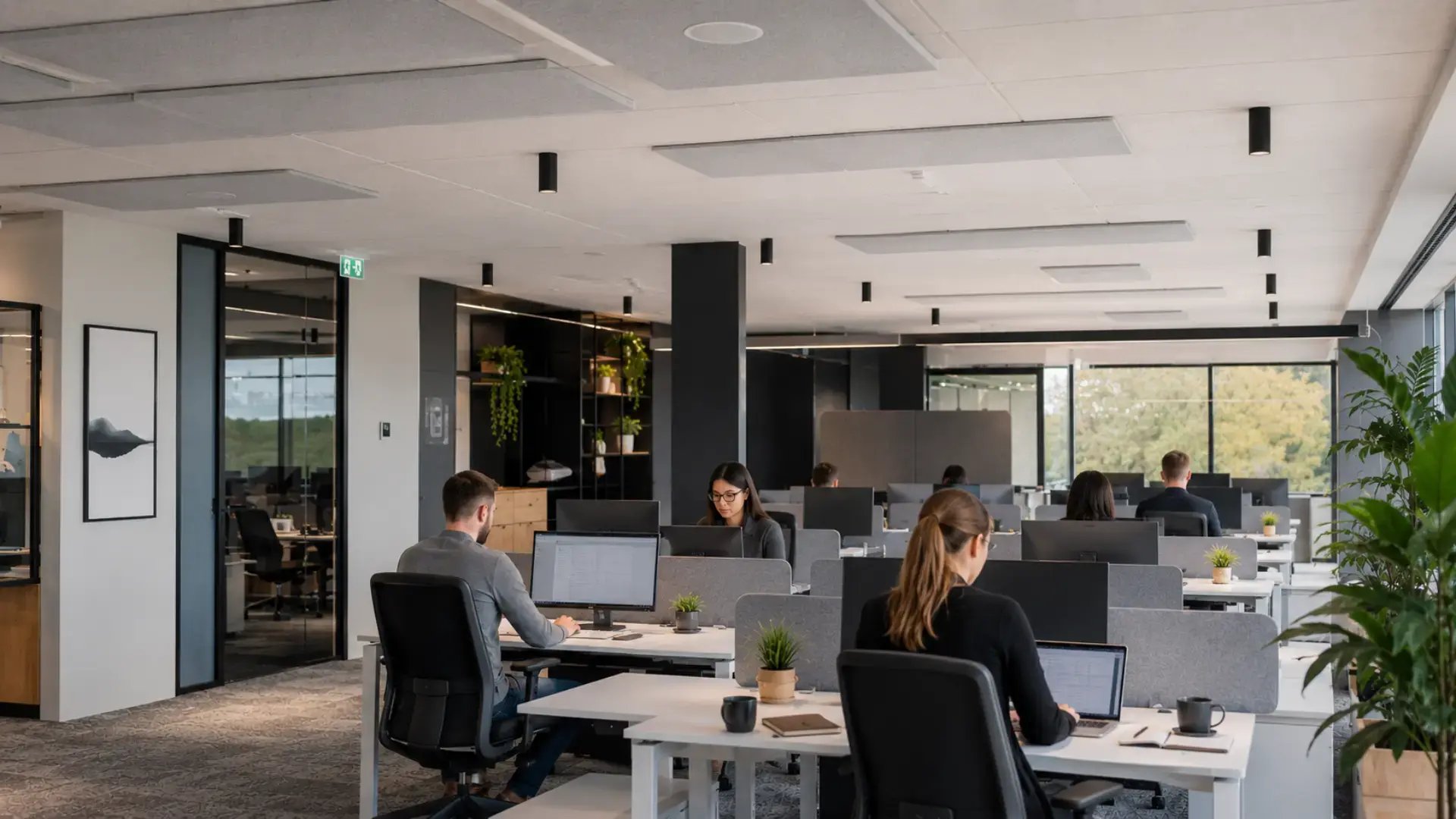
Speech Privacy
Improve confidentiality and reduce overheard conversations in open or cellular offices.
Reduce distracting conversations, improve speech privacy and create calmer working environments with specialist sound masking systems designed, installed and supported by AET.
Over 20 years experience helping organisations create more comfortable places to work, meet and communicate.
Trusted acoustic expertise
Open-plan offices, meeting rooms, consulting spaces and reception areas all behave differently. AET designs acoustic solutions around the room layout, surfaces, ceiling structure and privacy requirement, so the result feels natural in use.
The aim is not to make a workplace silent. It is to reduce speech clarity, control distraction and create a more comfortable acoustic environment for the people using the space.
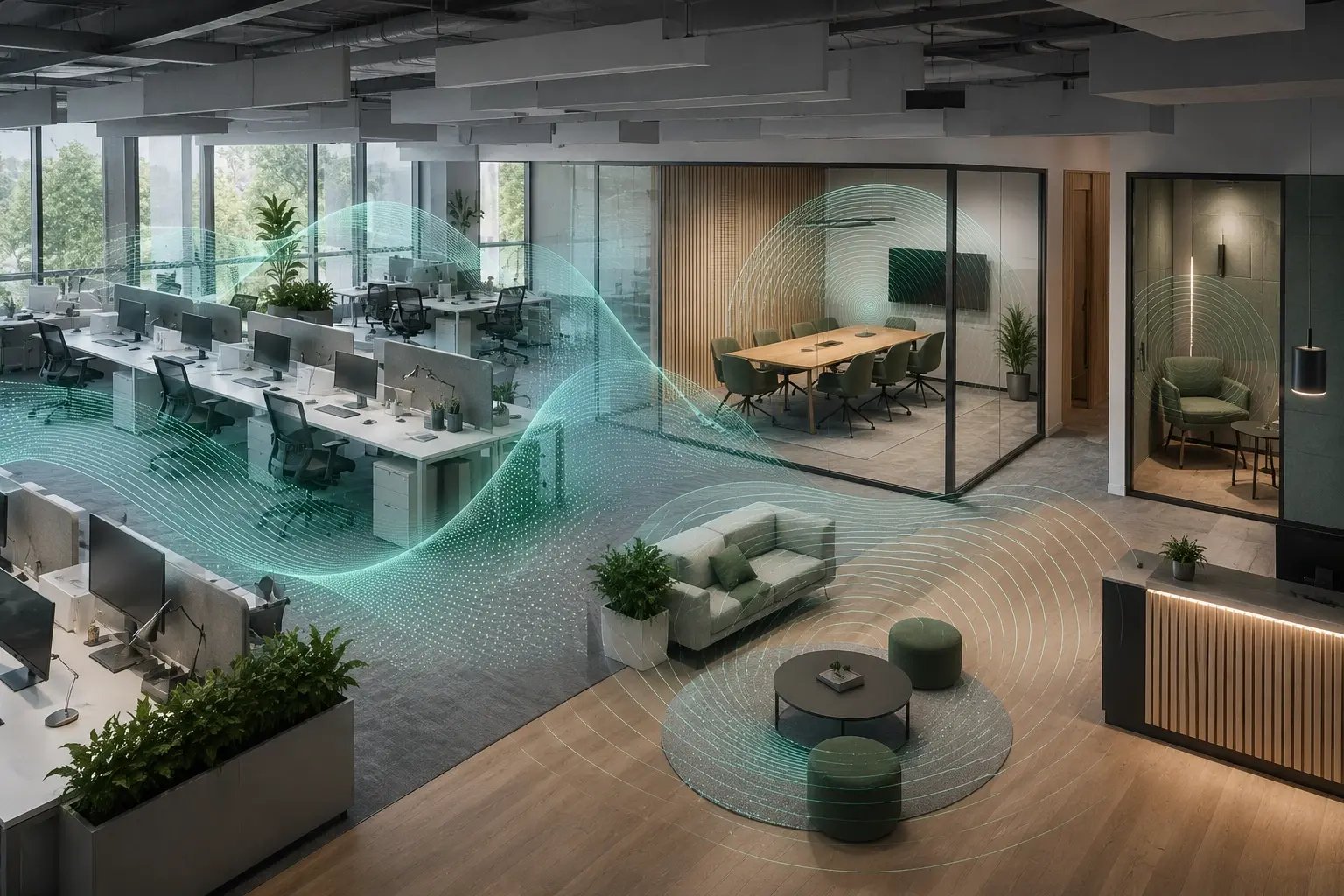
Workplace acoustic solutions
From speech privacy in open-plan offices to acoustic comfort in meeting rooms, every AET solution is designed around a specific workplace outcome.
Improve confidentiality and reduce overheard conversations in open or cellular offices.
Introduce carefully engineered background sound to make workplace conversations less distracting.
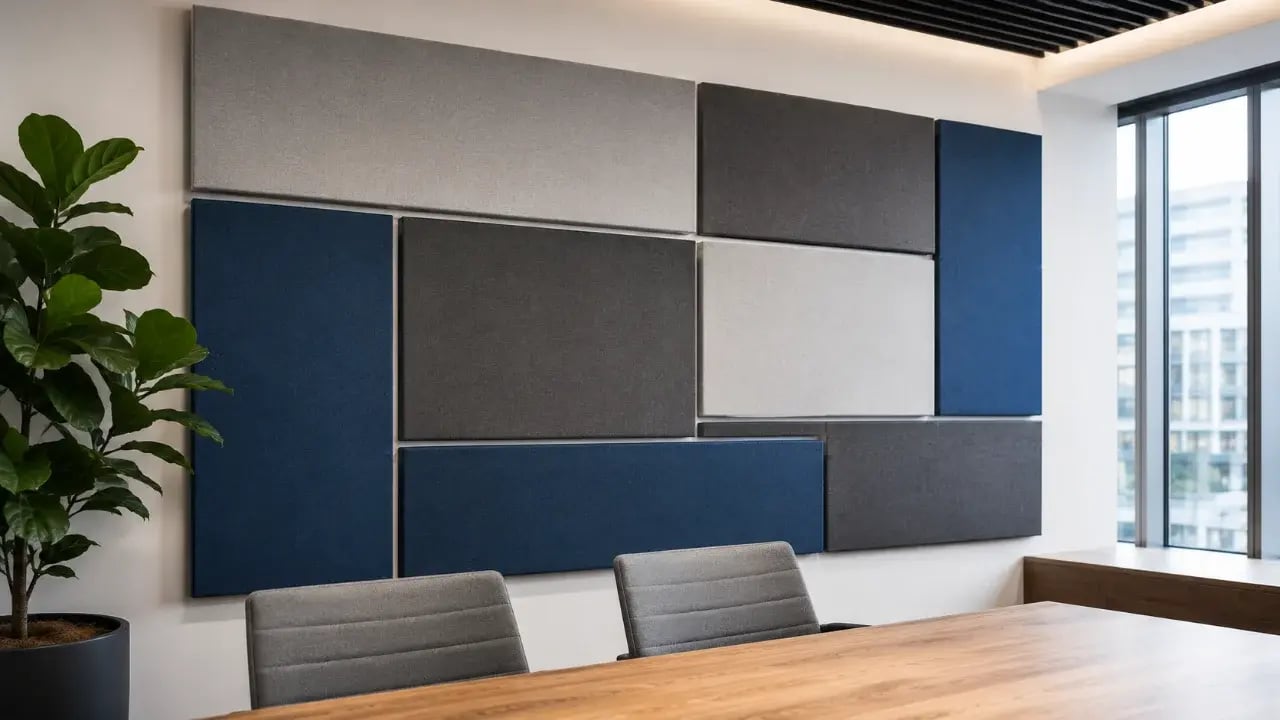
Create quieter, calmer spaces that support focus, meetings and everyday work.
Use proof points to make AET’s experience tangible. Keep claims specific, credible and easy to understand.
Sound masking is a specialist acoustic system that introduces a carefully controlled background sound into a workplace. It is designed to make distracting speech less intelligible, so conversations are less intrusive and people can focus more easily.
It does not make an office silent. It helps create a more balanced acoustic environment.
Speech privacy improves when conversations are harder to understand at a distance. Sound masking raises the background sound level in a controlled way, reducing the contrast between speech and the surrounding environment.
That means conversations are less likely to travel clearly across open-plan offices, meeting rooms, consultation spaces or shared working areas.
No. Sound masking is not simply “white noise” played into a room. A properly designed sound masking system is engineered around the space, the layout, the ceiling structure and the level of privacy or comfort required.
The aim is for the sound to feel natural and unobtrusive.
A well-designed system should be felt more than noticed. The sound is introduced at a controlled level and tuned to suit the environment.
When correctly specified, it should support comfort and privacy without becoming a distraction itself.
Sound masking can be used in open-plan offices, private offices, meeting rooms, consulting rooms, reception areas and other shared workplace environments where speech privacy or distraction is a concern.
Each space behaves differently, so the system should be designed around the actual room layout and use case.
Sometimes, yes. Sound masking and acoustic panels solve different parts of the acoustic challenge.
Sound masking helps reduce speech intelligibility and distraction. Acoustic panels, baffles and related treatments help control reverberation and improve the comfort of the room. In many workplaces, the best result comes from combining both.
Yes. Sound masking can often be designed for existing workplaces as well as new fit-outs and refurbishments.
AET would review the space, the ceiling or floor structure, the areas that need coverage and the privacy or comfort issues you want to solve before recommending the right approach.
Start by telling AET about the space, the acoustic issue and what you want to improve. That might be open-plan distraction, confidential conversations, meeting room privacy, or general acoustic comfort.
A specialist can then review the requirement and advise on the most practical next step.
Speak to AET
Tell us about the space you want to improve, the issue you are trying to solve and whether the project is for an existing workplace, refurbishment or new fit-out.
A specialist will review your enquiry and help you understand the most practical next step.